




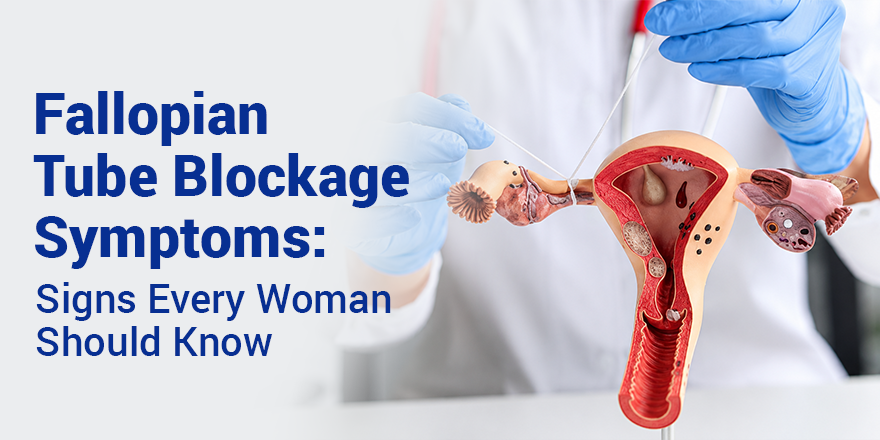
Fallopian Tube Blockage Symptoms: Signs Every Woman Should Know
When it comes to female fertility, the fallopian tubes play a crucial role. Also, these tubes connect the ovaries to the uterus and will help the egg travel for fertilization. Moreover, when one or both fallopian tubes become blocked, it will make conception tough and might even lead to serious reproductive health difficulties.
The most difficult part is that women do not experience obvious symptoms until they begin trying to conceive. Understanding the fallopian tube blockage symptoms will help in early diagnosis and timely treatment.
What Is a Fallopian Tube Blockage?
A fallopian tube blockage happens when the tubes are completely or partially obstructed, preventing the egg and sperm from meeting. The blockage can happen due to scar tissue, infections, or previous surgeries.
Relying on the location and severity of the blockage, fertility might be affected differently.
Common Signs of a Fallopian Tube Blockage
1. Trouble Getting Pregnant
One of the most frequent signals of blocked fallopian tubes is infertility, yeah, it can be. If a couple has been trying to conceive for more than a year and it just isn't happening, blocked tubes could be behind it. Some women with just one blocked tube may still manage to conceive naturally, but when both tubes are affected, the odds drop quite a lot, and it becomes harder.
2. Pelvic Discomfort
Other women notice persistent or on-and-off pelvic discomfort, often more on one side of the abdomen. That ache can feel stronger around periods, or it may show up more noticeably during ovulation, so timing matters a bit sometimes.
3. Periods that feel unbearable
Heavy or very painful menstrual cycles can sometimes hint at underlying reproductive trouble, like a possible tubal blockage, you know. Severe cramps should not be brushed aside, especially if there are fertility worries in the mix.
4. Unusual vaginal discharge
Some infections that contribute to blocked tubes can also cause abnormal vaginal discharge, often with a not-very-pleasant smell. This could be a sign of pelvic inflammatory disease, which can affect the reproductive organs and gradually damage them if nobody treats it is not treated soon enough.
5. Pain during intimacy
Pain or discomfort during intercourse may be connected to pelvic inflammation, scarring, or even endometriosis, in other words, conditions that can go along with fallopian tube blockage.
6. Ectopic pregnancy
If a tube is partly blocked, the risk of ectopic pregnancy rises, meaning the fertilized egg settles outside the uterus, usually somewhere in a fallopian tube. Possible signs include :
An ectopic pregnancy is an emergency, so it needs immediate medical attention.
Causes of fallopian tube blockage
How Is Fallopian Tube Blockage Diagnosed?
Doctors might suggest a few different tests, depending on what they suspect and how your symptoms look.
HSG Test (Hysterosalpingography)
They use a special X-ray approach to see if the fallopian tubes are open or if there’s any sort of blockage.
Ultrasound
This helps spot fluid-filled tubes or other related abnormalities; sometimes, it's just more subtle than you’d expect.
Laparoscopy
It’s a minimally invasive surgical step, where doctors can directly look at the reproductive organs, and not just rely on imaging alone.
Can Fallopian Tube Blockage Be Treated?
Yes, the fallopian tube blockage treatment plan usually depends on the severity and the cause of the blockage.
Common options include:
Many women can conceive after receiving the correct diagnosis and following the appropriate treatment path.
Tips to Maintain Reproductive Health
Try to have safe sex to help prevent infections
Go for routine gynaecological checkups
Don’t put off care if you notice pelvic pain or signs of infection
Keep up a healthy lifestyle, plus a balanced diet
If pregnancy doesn’t happen on time, consider a fertility evaluation early
Also Read: Can I-Pill Cause Infertility in Women?Final Thoughts
Blocked fallopian tubes are often among the main reasons for female infertility, but early detection can change a lot. Still, many women don’t notice much until they start trying for pregnancy, so awareness matters more than you might think. If you’re dealing with pelvic pain, painful periods, or trouble conceiving, talking with a fertility specialist can help find the real root cause and point you to the right treatment options. Your reproductive health really does matter, and getting timely care can help you move one step closer to becoming a parent. Furthermore, if you are looking for the best IVF centre in Gurgaon, then look nowhere but Seeds of Innocens IVF.