





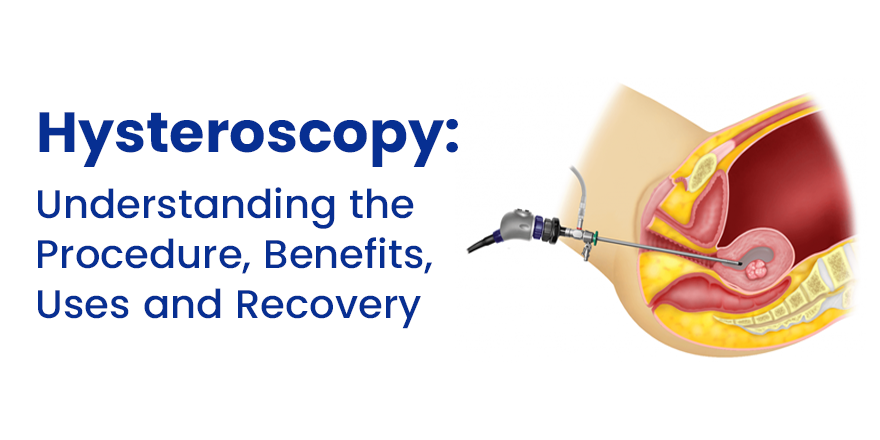
Hysteroscopy: Understanding the Procedure, Benefits, Uses and Recovery

In cases where fertility issues, unusual bleeding, or recurrent miscarriages are unexplained, the cause of the issue could be something internal. Hysteroscopy allows a physician to take a direct look at the interior of the uterus and, where necessary, treat some of the issues in the process.
However, one might wonder what hysteroscopy is, in what cases it is prescribed, and what benefit does it bring? Find out below.
What Is Hysteroscopy?
As we have already seen above, hysteroscopy definition states that this is a surgical procedure used for examining the interior of the uterus. The hysteroscopy procedure involves the insertion of a small tube known as a hysteroscope through the vagina and cervix into the uterus.
This allows the doctor to examine the interior of the uterus closely.
In simple terms, hysteroscopy means looking inside the uterus to diagnose and, in some cases, treat uterine problems.
The procedure is also known as histeroscopia in Spanish and may occasionally be misspelled online as hysterocopy.
Why Is Hysteroscopy Recommended?
A healthcare provider might recommend the patient to undergo a hysteroscopy when certain symptoms exist, which might need a more detailed assessment of the uterine cavity.
Some of the common causes are:
- Abnormal or excessive bleeding during menses
- Bleeding in between periods without any specific cause
- Infertility problems
- Recurrent miscarriages
- Polyps inside the uterus
- Presence of fibroids in the uterine cavity
- Adhesions of the uterus
- Any abnormality inside the uterus
- Extraction of an IUD that was inserted in the uterus but not found
- In some cases of evaluating the infertility status, assessment of the uterus can prove beneficial.
What Happens during Hysteroscopy Surgery?
Depending upon whether it is done for diagnostic purposes only or with treatment, the method will differ.
In hysteroscopy surgery, the following steps are generally followed by the doctor:
1. Pre-operation Preparation
The patient will be examined before the operation. The use of local, regional, or general anesthesia will depend on the goal of the procedure.
2. Insertion of the Hysteroscope
A slender hysteroscope will be carefully inserted through the vagina and cervix to reach the uterus. In contrast to conventional surgeries, hysteroscopy usually does not imply cutting of the abdomen.
3. Examination of the Uterus Cavity
The uterus will be distended with sterile liquid or gas to allow the doctor to inspect the uterine cavity and its walls.
4. Identification of Pathologies
The doctor will examine the uterine cavity for any pathologies such as polyps, fibroids, adhesions, etc.
5. Treatment (If Necessary)
Should some pathology be identified, it can be treated during this very visit. Such a hysteroscopy is called operative hysteroscopy. For example, certain polyps, adhesions, or fibroids are good candidates for hysteroscopic removal.
Types of Diagnostic
Hysteroscopy and Operative Hysteroscopy
There are two major categories of hysteroscopies.
Diagnostic hysteroscopy entails the visual inspection of the uterus and the discovery of abnormalities.
Operative hysteroscopy involves the combination of diagnostic procedures and treatment of certain diseases. There are special devices that can be inserted through the hysteroscope to manage certain conditions.
The technique can possibly minimize the requirement of other surgeries in properly selected cases.
What Is a Normal Hysteroscopy?
A normal hysteroscopy implies that there are no remarkable abnormalities found in the uterine cavity during the procedure. The result can be comforting especially when hysteroscopy has been performed as a test in infertility investigations or abnormal bleeding cases.
Nevertheless, fertility can depend on many factors and normal results cannot ensure pregnancy.
Is Hysteroscopy Surgery Safe?
Generally speaking hysteroscopy is a rather safe and minimally invasive procedure. Nevertheless, as any medical procedure, hysteroscopy may be associated with some possible complications. The complications can include infection, bleeding, injury of the cervix or uterus, fluid issues, or the reaction on anaesthesia. The level of risk will depend on the kind of hysteroscopy, condition, and patient's health. Your doctor will discuss the benefits and risks regarding your case.
Recovery Following Hysteroscopy
Recovery depends on the type of hysteroscopy, being diagnostic or operative in nature.
Following a hysteroscopy procedure, one might have:
- Mild cramps
- Vaginal spotting or light bleeding
- Discomfort
- Fatigue, if anaesthesia is used
In case of a simple diagnostic test, most people will be able to resume normal activities rather quickly. The recovery following an operative hysteroscopy could take time based on the treatment performed.
Always adhere to your doctor's instructions regarding physical activity, medications, sexual intercourse, and follow-ups.
Is It Helpful for Fertility?
Hysteroscopy can play a significant role in fertility as the uterine cavity serves as a place of implantation and pregnancy. Abnormalities like polyps, adhesions, or some kinds of fibroids can affect the uterine cavity.
If there is any identified abnormality and the problem is effectively addressed, this can help improve the uterus cavity and enhance the possibility of fertility in some cases.
But hysteroscopy is not a treatment for all causes of infertility. Evaluation for fertility should include other aspects like ovulation, ovarian reserve, sperm quality, fallopian tubes, age, and many more.
Hysteroscopy and Laparoscopic Surgery Comparison
While both procedures are minimally invasive surgical processes, yet there are differences between the two procedures.
Hysteroscopy is used to gain access into the inner side of uterus using vagina and cervix mainly to deal with issues within the uterine cavity.
Laparoscopic Surgery is used by means of minor cuts made in abdomen to see or treat any condition affecting ovaries, fallopian tubes, uterus and pelvic organs.
For patients needing complex reproductive surgery, choosing the best laparoscopic surgeon in India will depend on the qualification, experience, hospital facilities and medical issue that needs treatment.
In case you are looking for Best Laparoscopic Surgery in Delhi, it is recommended that you select a center that plans your treatment after taking an individual evaluation.
When To Seek Doctor's Advice?
It is advised that you consult a gynaecologist if you suffer from continuous abnormal bleeding, fertility issues, recurrent miscarriages or any issue that might have been detected within the uterus through ultrasound scan.
Also Read: Laparoscopy: Procedure, Benefits, Recovery & What to Know
Conclusion
Hysteroscopy gives the physician a clear vision into the uterine cavity and can detect several abnormalities related to periods and fertility. Operative hysteroscopy is an option available in certain cases to carry out treatment at the same time.
In case you have abnormal bleeding, infertility issues, recurrent miscarriages, or suspect uterine pathology, consult an experienced gynaecologist to see whether a hysteroscopy is suitable for your case.
Frequently Asked Questions
1. Is hysteroscopy painful?
Cramps or slight pain may occur, while some people may have little or no pain depending on the kind of procedure and anaesthetic.
2. How long does hysteroscopy last?
The procedure duration can vary depending on the purpose and whether it is diagnostic or operative.
3. Can hysteroscopy remove polyps?
Yes. Appropriate uterine polyps can be successfully removed during operative hysteroscopy.
4. Can I conceive after hysteroscopy?
Yes, pregnancy can happen after hysteroscopy. However, it is possible to conceive depending on the indication for the procedure, results, treatment done, and your fertility status in general.
5. Is hysteroscopy superior to laparoscopy?
No, both are not necessarily better than each other since they have different uses and focus on different areas in your body. It depends on your diagnosis.