




Implantation Bleeding vs. Period? Symptoms & Key Differences

What is Implantation Bleeding?
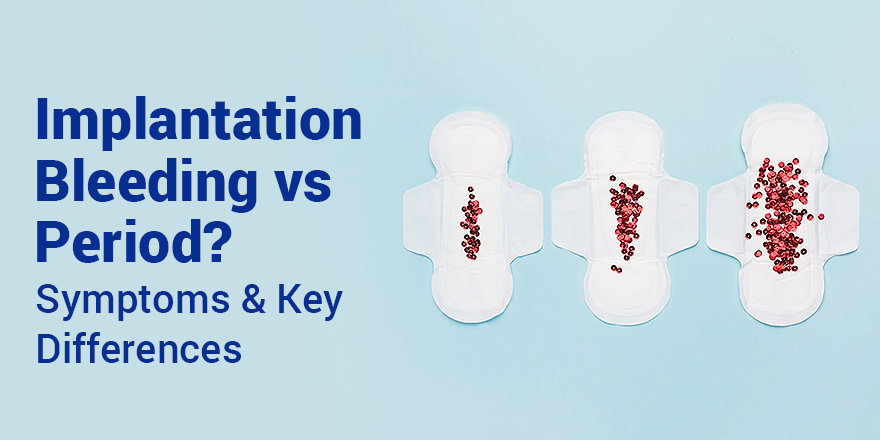
Implantation bleeding is normally the earliest indication that you are pregnant, and it happens when a fertilized egg implants itself into the wall of the uterus. How does implantation bleeding occur? During the process of embedding the embryo into the wall of the uterus, the rupture of minor blood vessels may result in bleeding. Additionally, this process is temporary and considered to be the early stage of pregnancy. But not all women may experience implantation bleeding. In this blog, we will find out more about implantation bleeding vs period, what exactly it is, and how you can identify bleeding after implantation.
When Does Implantation Bleeding Occur?
Implantation bleeding takes place 7-14 days post-ovulation or about a week before the next menstruation period. Some of the people get curious about that period coming 1 week early. Am I pregnant? It should be noted that the timing may vary due to the arrival of the embryo at the point of the uterus. Implantation bleeding typically occurs earlier than menstruation and can last for one or two days.
How can one Identify Bleeding After Implantation?
Here are some of the symptoms of implantation bleeding.
Implantation bleeding vs period causes pregnancy symptoms; hence, other symptoms a woman may experience include:
What is the Menstrual Cycle?
The menstrual cycle is a complex process that takes place each month. The menstrual cycle starts on the first day of menstruation. Egg release occurs on day 14 among most females. In case of no pregnancy, the lining of the uterus gets shed after 28 days. Normal menstrual cycles should take between 24 and 38 days. Implantation bleeding may occur before the period. Shedding of the lining takes place in case pregnancy does not occur. Another thing that happens is that a period starts and then stops. Am I pregnant?
A period that begins and then stops can be an early sign of pregnancy, like implantation bleeding or hormone fluctuations. However, it can simply be periods starting and stopping that are caused by typical cycle variation.
The primary difference between spotting and a period is the flow and duration. A period is steady, heavier, and lasts 3 to 7 days, usually requiring a pad or tampon. Spotting is light bleeding that occurs outside your cycle, requiring at most a panty liner
Also Read: Hormonal Imbalances: Understanding and Managing Their Impact on Fertility
Phases of the menstrual cycle
The menstrual cycle goes through the following phases:
Quality of Menstrual Bleeding
The quality of menstrual bleeding involves the following aspects: its flow, color, duration, and other symptoms.
Follicular Phase: It starts from the first day of the menstrual period and ends with ovulation. During this phase, the formation of an egg takes place and makes it ready for fertilization, along with the thickening of the uterus lining.
Ovulation: It refers to the release of a mature egg from the ovary, which usually takes place in the middle of the menstrual period.
Luteal phase: During the Luteal phase, the uterus lining becomes thick in anticipation of pregnancy. But when there is no fertilization of the egg.
The average length of the menstrual cycle is 28 days, although it may extend from 21 to 35 days.
Phases of Menstrual Bleeding
Menstrual bleeding marks the beginning of a new cycle that lasts 5-7 days. There are several phases of menstrual bleeding, such as:
The colour of the menstrual blood is mostly bright red, but may be dark brown. Moreover, during periods, the colour of the menstrual fluid keeps changing.
The menstrual flow is heavy during the first days, but then starts decreasing. Blood clotting may take place during the first few days.
The period of Menstruation lasts 5-7 days.
Several symptoms occur in women during menstrual cycles, such as bleeding, cramps, bloating, mood swings, sore breasts, nausea, and vomiting. However, the symptoms vary among women.
When does implantation bleeding occur
Implantation bleeding typically happens about 10 to 14 days after conception (around 6 to 12 days after ovulation). It happens when a fertilized egg attaches to the uterine walls, which often coincides with a few days just before your expected period.
Also Read: Understanding PCOS: Symptoms, Treatment, and Fertility Implications
Final Words
Implantation Bleeding and Menstrual bleeding are the same in appearance, but the woman needs to understand the difference between them. The timing, colour, and flow can help her differentiate between the two. But if you have seen spotting, then wait for four to five days before testing the pregnancy. It is important to understand that not all women undergo implantation bleeding, and if she is confused about the signs, then she should visit the doctor.
If you are looking for the best IVF centre in Kolkata , Seeds of Innocens IVF is recognized as one of the top IVF centres in Kolkata.
Frequently Asked Questions
1. Does implantation bleeding smell like periods?
Implantation bleeding symptoms show up 6 to 12 days after ovulation. That’s often about a week before your expected period. If you notice light spotting earlier than usual without any period symptoms, then it can be related to implantation.
2. Can you bleed like a period in early pregnancy?
It is uncommon for women to bleed as heavily as they do during their menstrual periods when they are just beginning a pregnancy. If a woman experiences any heavy bleeding, like a period, she should go see her doctor right away to make sure that there are no health issues.
3. Is implantation bleeding watery?
Implantation bleeding is usually watery but rather brown or light pink with light spotting instead of flow. It feels like any other type of vaginal discharge, where it’s more like spotting without being watery as well.
4. What are the early pregnancy signs I should look for after implantation?
Some of the early pregnancy symptoms include nausea, fatigue, and mild cramping. You may notice changes in your breasts in your mouth. Also, they can appear shortly after implantation but vary from person to person.
5. When does implantation bleeding occur in the menstrual cycle?
Implantation bleeding symptoms usually show up 6 to 12 days after ovulation. That is often about a week before your expected period. However, if you notice light spotting earlier than usual, especially without typical period symptoms, it can be related to implantation.