Unclean Washrooms: A Hidden Threat to Intimate & Fertility Health
Most of us use washrooms at offices, malls, hospitals, or during travel without a second thought. But what if this everyday habit is silently affecting your intimate health, fertility, and long-term well-being. Unclean washrooms are not just unpleasant, as they can expose your body to several infections that often reflect no immediate symptoms, yet can cause lasting damage.
This blog explains why washroom hygiene matters more than we think and how small habits will protect your reproductive health.
Early Fertility Impact: What You Need to Know
- Blocked Fallopian tubes in women
- Enhance the risk of delayed conception or infertility
- Affects sperm quality and motility in men
- Repeated exposure to infections can quietly affect reproductive health.
- Cause Inflammation in reproductive organs
Many couples who struggle to conceive are surprised to learn that past silent infections, sometimes caused years earlier, play a role.
This is why doctors emphasize pre-conception health checks and hygiene awareness.

Why People Ignore the Signs
Despite awareness, intimate health is surrounded by:
- Stigma
- Embarrassment
- Fear of Judgement
Common thoughts include:
“It’s probably normal.”
“It will go away on its own.”
“I don’t want to see a doctor for this.”
Unfortunately, silence enables infections to grow stronger.
Since your body communicates through every small sign, ignoring them will not make the problem disappear.
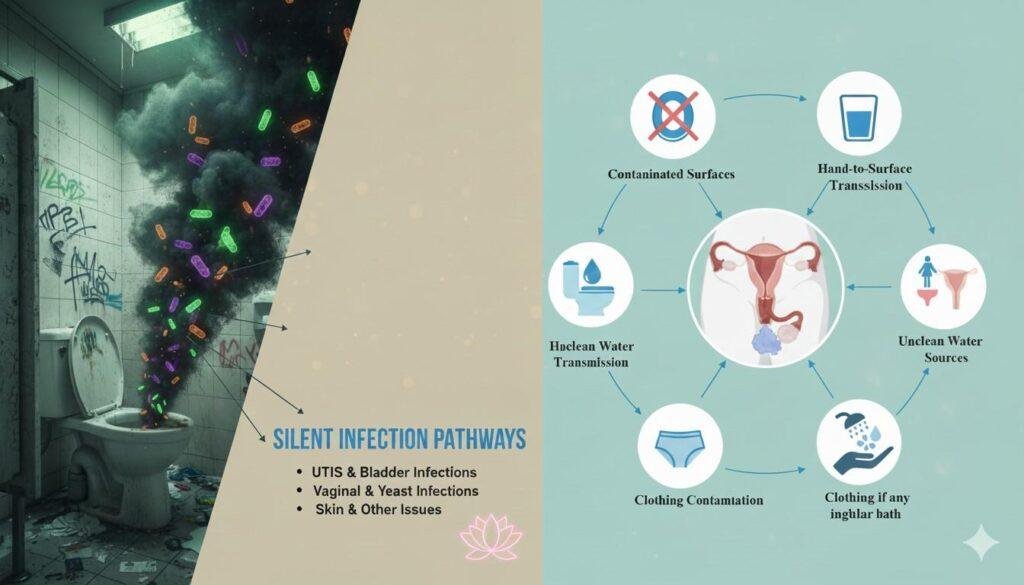
How Unclean Washrooms Trigger Silent Infections
Washrooms are ideal breeding grounds for several viruses, fungi, and bacteria. Warmth, moisture, and frequent use enable germs to multiply rapidly, especially when hygiene standards are poor. Some of the common issues include:
- Dirty Toilet Seats
- Wet Floors and Poor Ventilation
- Unwashed Flush Handles
- Contaminated door handles and taps
- Shared or unhygienic hand-drying facilities.
When these surfaces come in contact with your hands or skin, microorganisms can easily transfer to the body.
The intimate area is especially vulnerable as it has sensitive skin, a delicate bacterial balance, and a moist, warm environment where germs thrive.
How Unclean Washrooms Affect Women’s Intimate Health
Women are biologically more prone to infections due to:
- A shorter urethra
- Hormonal changes affecting vaginal pH
- Proximity of the urethra, anus, and vagina.
Common Issues in Women
1. Urinary Tract Infections (UTIs)
Bacteria such as E. Coli will easily enter the urinary tract through contaminated toilet seats, improper wiping habits, or even dirty hands.
2. Bacterial Vaginosis
Bacterial Vaginosis occurs when the natural balance of vaginal bacteria is disrupted, often triggered by exposure to unhygienic conditions.
3. Fungal (Yeast) Infections
Public Washrooms with Moisture and Poor Sanitation are ideal environments for fungi. Ignoring recurrent infections can cause:
- Skin Sensitivity
- Persistent Irritation
- Increased vulnerability to other infections
How Unclean Washrooms Affect Men’s Intimate Health
Intimate infections are not just a woman’s problem. Men also carry problems without symptoms, which will unknowingly affect their own fertility and their partner’s health.
Common Issues in Men
- UTIs are related to poor hygiene
- Due to moisture, fungal infections in the groin area. Asymptomatic bacterial problems that spread silently.
These conditions will negatively impact reproductive outcomes.
Symptoms of Intimate Infections Linked to Poor Washroom Hygiene
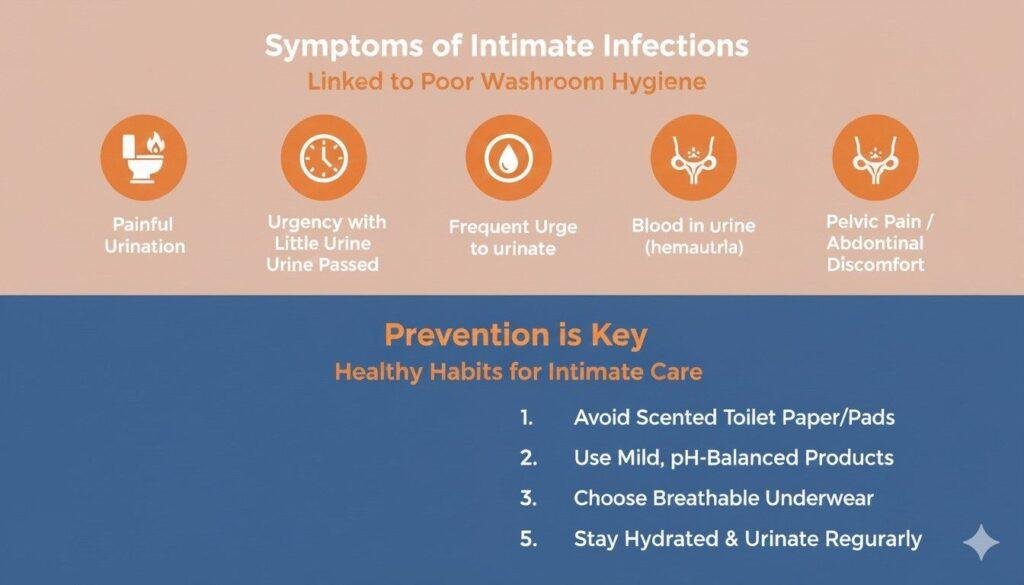
Infections caused by unclean washrooms often start silently. However, certain symptoms might indicate an underlying intimate or urinary infection, which requires medical attention if you are planning for pregnancy.
Common Symptoms in Men and Women
- Frequent or Urgent Urination.
- Lower Abdominal or Pelvic Pain
- Burning sensation while urinating
- Persistent discomfort or irritation in the intimate area
Symptoms Common in Women
- Pain during intercourse.
- Recurrent Urinary Tract Infections.
- Abdominal Vaginal Discharge.
Symptoms Common in Men
- Itching, redness, or rashes in the groin area
- Burning after urination or ejaculation
- Discomfort in the testicular or pelvic region
- Recurrent fungal or bacterial infections
Why Early Symptoms Matter for Fertility
Many intimate infections may show mild or even no symptoms initially, yet untreated infections can cause inflammation in reproductive organs that can affect sperm quality in men and enhance the risk of delayed conception in women.
Early medical consultation helps prevent long-term complications and protects fertility health.
When to Seek Medical Help
You should consult a doctor if:
- Symptoms persist
- You are planning a pregnancy
- You’ve had repeated UTIs or infections
Early diagnosis will prevent long-term complications.
How to Safely Use Public Washrooms to Protect Intimate & Fertility Health
Unclean washrooms will quietly affect intimate hygiene and fertility health, especially when basic precautions are ignored. Whenever you use a shared or public washroom then try to avoid direct contact with the toilet seats by using disposable seat covers or even squatting where culturally appropriate and never sit on visibly wet or dirty surfaces. Avoid using unclean water or shared towels for intimate cleaning and limit areas. It is necessary to avoid using unclean water or shared towels for intimate cleaning and restrict unnecessary contact with the flush handles and door locks.
Also Read: Age and Fertility Explained: Key Facts You Must Know
Why This Topic Is Informational and Essential?
This issue concerns not only cleanliness but also long-term health, fertility, and quality of life. While unclean washrooms are sometimes unavoidable, knowledge can help us minimize related risks.
Final Thoughts: Your Intimate Health Deserves Attention
Your intimate health is not something you should feel embarrassed about, as it is an important part of your physical, emotional, and reproductive well-being. Unclean washrooms may seem like a minor inconvenience, but the infections they can cause are not small at all, especially when they remain undetected. Taking care of yourself doesn’t need fear, only awareness, hygiene, and timely action. You just need to listen to your body, respect your health, and remember that prevention is always easier than treatment.
Also Read: Embryo Quality: What Matters Most for IVF Success?