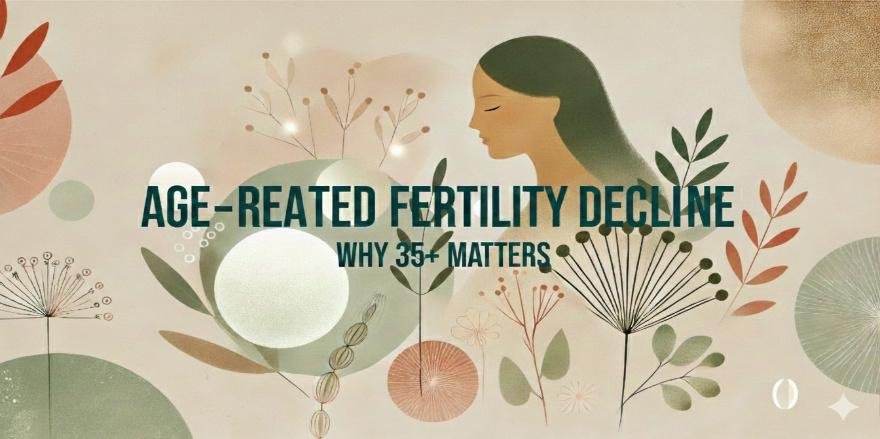
Age-Related Fertility Decline: Why 35+ Matters
Starting a family can be thrilling and exciting. For some people, getting pregnant happens right away, while for others, getting pregnant takes time and maybe a bit of luck, too. Knowing when you are most fertile will make getting pregnant easier, and there are some simple steps that you can take when you are trying to get pregnant. For example, having sex more often and gaining a healthy weight, mainly when you are ovulating, might help. So, don’t smoke or drink alcohol, and of course, have a healthy sperm count too. However, having unprotected sex more often, healthy couples get pregnant within one year, and if you are having trouble getting pregnant, then you should seek help from a fertility specialist or other healthcare professional.
At Seeds of Innocens, we believe that awareness is the initial step towards informed decision-making. Understanding how age impacts fertility allows individuals and couples to plan better and seek medical guidance when required.
What Is Age-Related Fertility Decline?
Age-related fertility decline refers to the natural reduction in reproductive potential as a person grows older. However, this decline is more pronounced in women due to the limited number of eggs present from birth. Moreover, men also experience age-related changes that will affect sperm quality and overall fertility. Fertility does not suddenly stop at 35; however, the chances of natural conception start to decrease steadily after this age, which makes it a crucial milestone in reproductive health.
Why Does Fertility Decline After 35 in Women?
Women are born with a finite number of eggs, and both the quality and quantity of eggs decrease over time. By mid-30s, this decline becomes more noticeable.
Key Reasons for Female Fertility Decline After 35
- Decline in Egg quality
- Reduced Ovarian Reserve
- Enhanced Chances of Miscarriage
- Higher Risk of Chromosomal Abnormalities
- Higher incidence of conditions like Fibroids, PCOS, and Endometriosis
As an outcome, conception might take longer, and the risk of pregnancy complications might increase with age.
Why AMH Levels May Drop Before IVF Treatment
One of the common but often overlooked reasons for low AMH levels at the time of IVF consultation is repeated ovulation induction without proper evaluation. Many women continue to visit gynaecologists and undergo various cycles of ovulation induction by using medications such as clomiphene and letrozole without a detailed hormonal workup, ovarian reserve assessment, or a clear medical indication. While some of these medicines are helpful when it is used appropriately, repeated and unmonitored stimulation cycles can unnecessarily strain the ovaries. By the time couples are referred to an IVF clinic, often after 5-6 failed cycles, AMH levels might have already declined below optimal levels that are commonly below 1.5ng/ml, which are limiting the available treatment options. Early fertility evaluation and individualized treatment planning are critical to preserving ovarian reserve and improving IVF outcomes.
How Age Affects Male Fertility After 35
Men continue to produce sperm throughout their lives, since sperm quality declines with age. After 35-40 years, changes will occur that will impact fertility and pregnancy outcomes.
Age-Related Changes in Male Fertility
- Decreased sperm Motility
- Enhanced sperm DNA Fragmentation
- Increased time to achieve Pregnancy
- Higher risk of genetic abnormalities
All these factors can affect natural conception and may also influence assisted reproductive treatment outcomes.
Fertility Statistics: What the Numbers Say
Understanding Fertility statistics will help set realistic expectations:
- Women under 30 have approximately a 20-25% chance of conception each cycle.
- At 35, the chance drops around 15%
- By 40, it declines approximately 5 to 8% every cycle
- Miscarriage rates increase significantly after 35.
However, these figures will highlight why early evaluation becomes essential for individuals above 35 who are trying to conceive.
If you are above 35, then certain signs indicate the need for a fertility evaluation:
- If you are trying to conceive for 6 months without success
- Irregular or absent menstrual cycles
- Known reproductive health conditions
Early consultation with a fertility specialist will help identify issues and provide timely solutions.
Can Lifestyle Slow Down Fertility Decline?
While age cannot be reversed, healthy lifestyle choices can support fertility and improve outcomes.
Fertility-Friendly Lifestyle Tips
While age cannot be reversed, healthy lifestyle choices can support fertility and improve outcomes.
Fertility-Friendly Lifestyle Tips
- Get Adequate Help
- Follow a balanced and nutrient-rich diet
- Avoid smoking and excessive alcohol use
- Manage stress through yoga or meditation
- Exercise regularly but moderately
Also, these steps will help to optimize reproductive health but might not completely offset age-related decline.
Fertility Treatment Options After 35
Modern reproductive medicine provides various options for couples facing age-related fertility challenges.
Available Fertility Treatments
- Ovulation Induction
- Intrauterine Insemination
- In-vitro Fertilization
- Intracytoplasmic Sperm Injection
- Donor Egg options when required
At Seeds of Innocens, treatment plans are customized based on medical history and fertility goals.
Why Early Fertility Assessment Matters
Fertility testing after 35 offers clarity, and it helps avoid unnecessary delays. However, tests might include:
- Ultrasound for Ovarian Reserve
- AMH (Anti-Mullerian Hormone) levels
- Hormonal Evaluations
- Semen Analysis for Men
An early assessment will allow doctors to recommend the most effective treatment pathway.
Also Read: Natural Ways to Increase AMH Levels
Why Choose Seeds of Innocens for Fertility Care?
Seeds of Innocens is committed to providing transparent, ethical, and patient-centric fertility care, and our approach combines advanced reproductive technology with emotional support that will make sure that each patient will feel guided throughout their journey.
Key strengths include:
- Advanced Embryology labs
- Experienced Fertility specialists
- Individualized Treatment Plans
- Honest Counseling and ethical practices.
Key strengths include:
Age-related fertility decline is a natural process, as it does not mean the end of your parenthood dreams. After 35, awareness, timely evaluation, and expert guidance become especially crucial. With advancements in fertility treatments and the right medical support, many individuals and couples successfully achieve pregnancy even later in life.
At Seeds of Innocens, we walk with you through each step of this journey that offers science-backed solutions and unwavering hope for the future.
Start your journey of parenthood with Seeds of Innocens–where every step towards parenthood is guided with compassion and care.
Book your fertility Consultation today at 9810350512